Darwin Commercial Property Investment
Darwin is the smallest capital city commercial market in Australia, and it prices accordingly. Headline yields on investment-grade stock typically sit wider than in any other capital, the buyer pool is thin, and the economy leans on government, defence and energy in a way no southern market does. For a yield-led private investor the Territory can pay well over a full hold. It can also punish buyers who bring southern assumptions north without adjusting them.
Darwin turns on how the market is structured, the demand drivers that actually matter (defence, government, the port and the energy projects), the seasonality and insurance questions that shape underwriting, and the mistakes interstate buyers make most often.
How the Darwin Market Is Structured
The CBD and the Waterfront
Darwin's CBD is compact, concentrated around Smith Street, Cavenagh Street, Mitchell Street and the Esplanade. The Northern Territory Government is the dominant office tenant, with Commonwealth agencies and the resources and engineering firms making up most of the balance. Mitchell Street carries the hospitality strip, while retail in the Smith Street Mall has ceded ground to the suburban centres over a long period, and buying CBD retail requires a clear view on what the tenancy will look like at the next renewal rather than what the rent roll says today.
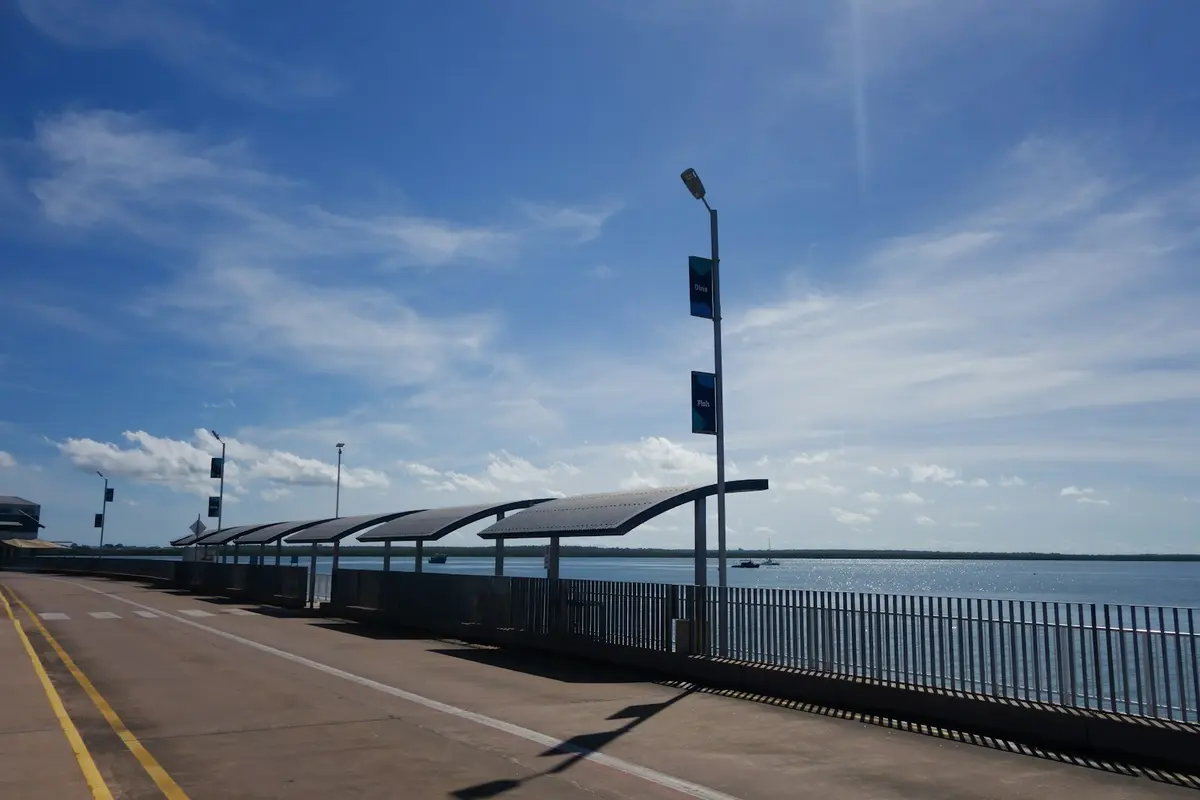
The Darwin Waterfront precinct, anchored by the convention centre, sits below the CBD escarpment and trades as a hospitality and mixed-use pocket. Charles Darwin University's city campus has added weekday foot traffic to the CBD core, which helps the food and services tenancies around it.
Industrial
The industrial market runs through Winnellie and Berrimah on the inner corridor near the airport, out to East Arm at the port, and to Pinelands and Yarrawonga near Palmerston. Stock is heavily owner-occupied, tenants are mostly private operators in service trades, logistics, marine and resources support, and lot sizes and building quality vary widely. Investment-grade leased industrial with a credible tenant is scarce, and when it trades it attracts interstate money quickly.
Palmerston and the suburban centres
Palmerston is Darwin's satellite city, roughly twenty kilometres from the CBD, and it has carried most of the region's household growth for years. It has its own retail core around the Gateway centre, a public hospital, and an expanding trade and services industrial base. In the northern suburbs, Casuarina holds the dominant regional shopping centre, with strip retail in Parap and Nightcliff and medical and allied health demand clustered near Royal Darwin Hospital at Tiwi.
Defence and Government as Demand Drivers
Government is the structural underpinning of the Darwin economy. The NT Government is the largest office occupier in the CBD, and Commonwealth agencies add a second layer of covenant-grade tenancy that most regional markets never see.
Defence sits on top of that. Robertson Barracks near Palmerston, RAAF Base Darwin beside the airport, and Larrakeyah Barracks with the naval base at HMAS Coonawarra together make Darwin one of the most defence-exposed cities in the country. United States Marine rotations have operated out of Darwin since 2012, and sustained capital works programs across the bases feed demand for contractor accommodation, service-trade industrial space and hospitality spending.
The buyer-side caution is that defence-linked demand often arrives through contractors rather than through Defence itself. A lease to a private engineering or logistics firm whose work is tied to a specific base works program is a very different covenant from a lease to a government agency, even when the rent looks similar. Tenant due diligence should establish what actually stands behind the income, how long the underlying contract runs, and what the tenant's business looks like when the current program ends.
The Port and the Energy Projects
The Port of Darwin at East Arm is the closest Australian deepwater port to Asia and handles livestock, minerals, fuel and general freight alongside its defence role. Its long-term lease and ownership arrangements have been the subject of sustained Commonwealth attention, so buyers of port-adjacent assets should check the current state of play as part of due diligence rather than assuming continuity.
Energy is the other pillar. The Ichthys LNG plant at Bladin Point has been operating since 2018, Darwin LNG at Wickham Point continues with backfill gas from the Barossa project, the proposed Middle Arm precinct is planned as a further industrial development zone, and the Beetaloo Basin remains a prospective onshore gas play. Together these projects support a base of engineering, logistics and accommodation demand across the industrial corridors.
The lesson from the last cycle matters more than the project list. During the Ichthys construction phase, Darwin rents and values across most asset classes ran hard on a temporary workforce measured in thousands, and then corrected when construction finished and the workforce left. Construction-phase demand and operations-phase demand are different quantities, and the second is much smaller. Underwrite the income a project supports in its operating state, and treat anything contingent on a project that has yet to reach a final investment decision as upside rather than base case.
Seasonality, Cyclone Risk and Insurance
The wet season
Darwin runs on two seasons. The wet, roughly November to April, brings monsoonal rain, humidity and the cyclone window, and it shapes the commercial calendar. Leasing campaigns, building works and transaction activity all skew toward the dry. For a buyer, the wet is also the most revealing time to inspect. A building inspected in September tells you little about how its roof, drainage, sealing and air conditioning perform under monsoonal load. If the timetable allows, inspect in the wet, and if it does not, brief the building inspector to address wet-season performance directly.
Cyclone coding
Darwin was rebuilt after Cyclone Tracy in 1974 to cyclone-rated construction standards, and the building code in the region reflects high wind loading requirements. Most of the commercial stock postdates Tracy, but condition still matters. Roof fixings, cladding, ageing seals and deferred maintenance all carry more consequence in a cyclone region than they would in a southern capital, and the inspection scope should treat them accordingly.
Insurance
Insurance is a live underwriting item in northern Australia rather than a line item to estimate. Premiums run materially above southern-capital levels for comparable assets, fewer insurers write cover in the north, and terms can change year to year. The Commonwealth's cyclone reinsurance pool is directed at household, strata and eligible small business policies within sum-insured caps, and larger commercial assets generally sit outside it. The practical rule is to obtain a real insurance quote on the specific asset during due diligence, before going unconditional, and to model the premium into outgoings. Even where a net lease passes insurance through to the tenant, a heavy premium raises the tenant's total occupancy cost and will surface as pressure on the rent at the next review or renewal.
What Interstate Buyers Get Wrong
- Reading wide yields as mispricing. Darwin's yield premium over the southern capitals is compensation for thin liquidity, a shallow re-leasing pool, higher insurance and project-cycle exposure. Some assets are still cheap on those terms, and working out which ones requires the local context set out above rather than a spreadsheet comparison against national yield benchmarks.
- Valuing off the face rent. Incentives and soft effective rents follow every project downturn. Establish the net effective rent and the depth of the tenant pool behind the current occupant before capitalising the income.
- Leaving insurance until after exchange. A premium quote that lands well above the estimate can break the numbers on an otherwise sound deal. Get the quote inside the due diligence period.
- Treating one cycle as the trend. Darwin's history is a sequence of project-driven surges and corrections. Entry pricing set at the top of a construction phase has hurt interstate buyers before.
- Assuming a southern exit. The buyer pool at exit is thin, and sale campaigns run longer than they would in Brisbane or Sydney. Model a longer holding and selling period rather than assuming liquidity that the market has never offered.
Territory-Specific Buyer-Side Considerations
No land tax
The Northern Territory levies no land tax, and it is the only Australian jurisdiction that does not. Over a long hold that is a genuine and durable saving against an equivalent asset in the states. It is best treated as an improvement to net holding cost rather than a reason to accept weakness elsewhere in the deal.
Conveyance duty
Conveyance duty applies to commercial transfers in the Territory, and the schedule differs from the state regimes buyers may know. Confirm the current rates and any surcharges with the Territory Revenue Office early, and put the figure in the acquisition cost model rather than carrying a southern estimate.
Lease law
Retail leases in the Territory are governed by the Business Tenancies (Fair Dealings) Act 2003, which carries its own disclosure and conduct obligations. Office and industrial leases sit outside that regime under general lease law. A solicitor who works NT leases as core practice will pick up Territory-specific points that a southern precedent review can miss.
Running a Darwin Brief
A Darwin acquisition rewards patience and local information. Investment-grade stock is scarce, a meaningful share of it trades quietly through agent relationships before a campaign starts, and the right response to a thin market is a precise brief held open for longer rather than a compromise purchase made quickly.
Build the due diligence list for the Territory: the tenant's exposure to defence and project work, wet-season building performance, cyclone-era construction and condition, a real insurance quote, and duty confirmed with the Territory Revenue Office. Value the asset on operations-phase demand with project upside held to one side. Buyers who price Darwin on its own terms, and answer the insurance and liquidity questions before exchange, put themselves in the best position to convert the Territory's wider yields into realised returns.