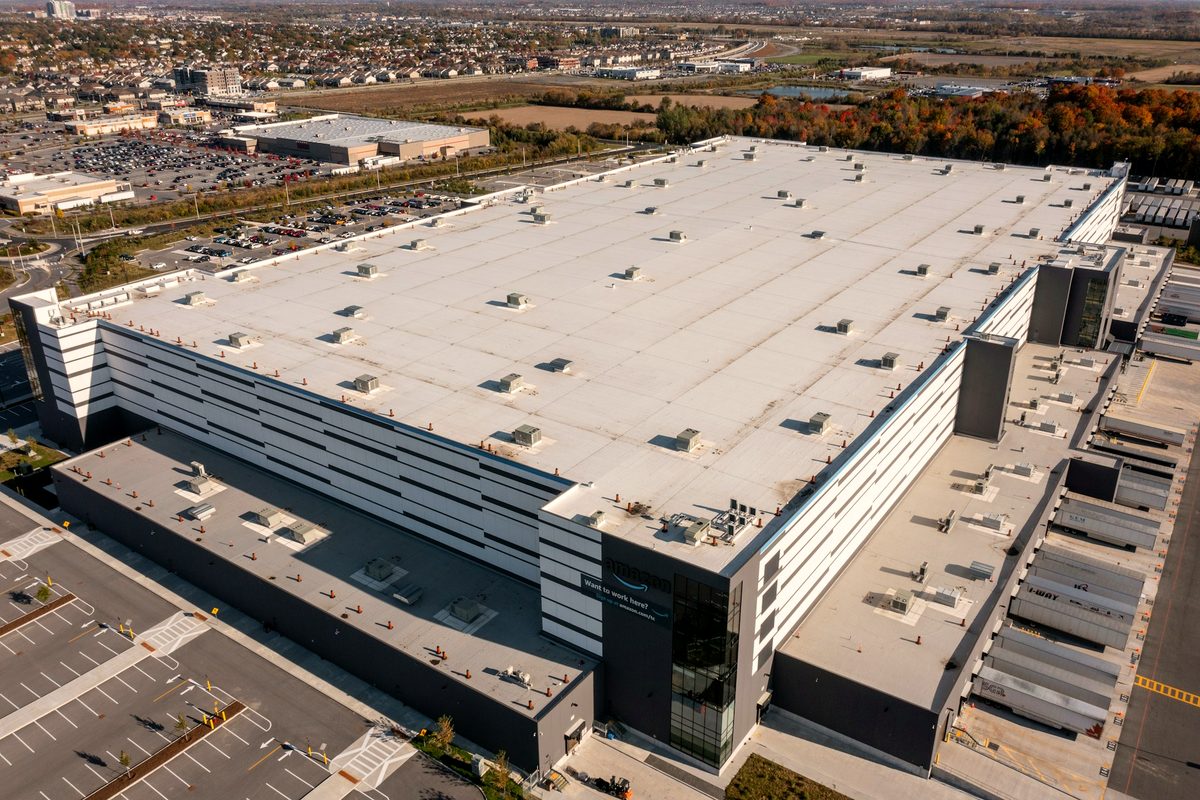
When a buyer acquires a last-mile logistics property, they are not really buying a shed. They are buying a position in the supply chain at the point where it is most expensive, most time-sensitive, and hardest to replicate. Last-mile facilities are the small-to-mid sized warehouses sitting close to where people live, from which couriers, parcel carriers and online retailers run the final delivery leg to the front door. That proximity to population is the entire investment thesis, because the land it sits on is largely finished being created in Australia's established metro areas.
Over the past decade, last-mile and urban infill industrial has gone from an afterthought to arguably the most sought-after sub-segment of Australian commercial property. The combination of structural e-commerce growth, compressing delivery expectations, and a genuine scarcity of well-located industrial land has driven both strong rental growth and significant tightening of capitalisation rates. For a private investor or self-managed fund, the appeal is a tangible asset with a defensive tenant base, relatively simple buildings, and a demand story that is easy to understand but hard for new supply to satisfy.
This guide explains what last-mile property actually is, why infill land scarcity underpins its pricing, who the tenants are, the specifications that matter, and how a buyer should approach due diligence on what is, for all its popularity, still an industrial asset with industrial risks.
The scarcest input in last-mile logistics is not the building. It is the zoned, serviced, well-located land near population that the building stands on, and they are not making any more of it inside the established metros.
What "last-mile" really means
In logistics, the journey of a parcel is usually broken into stages. The first mile moves goods from manufacturer or port into a large regional distribution centre. The middle mile shifts freight between those big facilities. The last mile is the final, branching leg from a local depot out to thousands of individual addresses. It is the most labour-intensive and most costly part of the chain per unit moved, precisely because it cannot be consolidated.
That economics is why operators want last-mile facilities physically close to the catchment they serve. A van completing residential deliveries can only cover so many drop-offs in a shift; the closer the depot sits to the delivery zone, the more productive each route becomes and the faster the promised delivery window can be met. As consumers came to expect next-day and increasingly same-day delivery, the value of a depot in the right suburb rose sharply. Last-mile property is best understood as a sub-set of the broader industrial property asset class, but one defined by location intensity rather than sheer size.
How it differs from big-box logistics
The headline-grabbing logistics deals are usually the big-box variety: vast purpose-built distribution centres of tens of thousands of square metres on the metropolitan fringe, leased to a single major occupier on a long term. Last-mile assets are the opposite end of the spectrum, smaller floor plates in established, often older, industrial pockets surrounded by housing. They tend to be older stock, sometimes multi-tenanted, frequently on land that is more valuable than the improvements sitting on it. That land-rich character is central to both the return profile and the risk.
1 The infill land-scarcity thesis
The core argument for last-mile property is a land argument. Inside Australia's established metropolitan areas, industrial-zoned land near large residential populations is effectively finite. Decades of urban consolidation, residential rezoning of former industrial precincts, and competition from higher-value uses have steadily eroded the stock of well-located infill industrial land. New industrial estates are pushed further out to greenfield corridors, which are useful for big-box distribution but poorly located for last-mile delivery.
This scarcity does two things. First, it constrains new supply where it is most needed, supporting rents and limiting the competitive threat that usually caps industrial rental growth. Second, it builds an embedded land value into the asset, because the site may eventually be more valuable for a higher-and-better use than its current warehouse improvements. Buyers should be cautious, however, not to over-pay on a speculative redevelopment story that depends on a rezoning that may never come.
- Constrained supply: limited new infill industrial land means demand pressure shows up in rents rather than being absorbed by fresh construction.
- Embedded land value: the underlying site can hold or grow value independently of the building, providing a partial floor under the investment.
- Competing uses: the same scarcity that supports value also means residential or mixed-use rezoning can periodically remove industrial land from the market entirely.
2 Who the tenants are
The tenant base for last-mile property is broad, which is part of its defensive appeal. Unlike a single-purpose asset reliant on one operator, an urban warehouse can usually serve many users. The most common occupier categories include:
- Parcel and postal carriers: Australia Post and its StarTrack arm, along with private carriers and the local depots that feed their networks.
- Pure-play and hybrid e-commerce: Amazon and other online retailers running urban fulfilment and delivery stations close to customers.
- Third-party logistics (3PL) and couriers: operators such as Team Global Express, Linfox, and numerous courier and freight-forwarding businesses that lease space to run delivery operations.
- Dark stores and rapid grocery: retailer-run micro-fulfilment sites and grocery picking facilities serving online order demand.
- Trades, services and general industrial: the everyday users who keep infill industrial estates fully leased even when the logistics narrative cools.
That diversity matters at re-letting time. A purpose-built site tied to one specialised user carries concentration risk, whereas a flexible urban warehouse can typically be re-leased to a different category of tenant, which broadens the pool and supports the durability of income.
3 Specifications that drive value
Even within the same suburb, two warehouses can command very different rents and prices depending on their physical specification. The features below separate a genuinely functional last-mile facility from tired stock that will struggle to attract modern occupiers.
| Specification | Why it matters for last-mile |
|---|---|
| Clearance height | Internal clearance determines racking and storage density; older infill stock often has lower clearance than modern users prefer. |
| Hardstand and yard | Van and truck manoeuvring, parking and staging space; constrained urban sites frequently lack adequate yard depth. |
| Loading: dock vs on-grade | On-grade (drive-in) access suits vans and light vehicles; recessed docks suit larger trucks. The right mix depends on the delivery fleet. |
| Power supply | Three-phase capacity supports refrigeration, automation and electric-vehicle fleet charging, an increasingly important demand for delivery operators. |
| Office and amenity ratio | Last-mile operations are labour-heavy, so adequate staff amenity and a sensible office component support the use. |
| Access and traffic | Ease of getting vehicles in and out at peak times, and proximity to arterial roads, directly affects route productivity. |
One specification trend deserves particular attention. As fleets electrify and as some operators add chilled or frozen capability for grocery and meal delivery, electrical capacity is becoming a genuine value driver. A site with the ability to install EV charging or refrigeration without an expensive grid upgrade has a meaningful advantage; one constrained by limited power can be functionally obsolete for those uses. Where refrigeration is central to the tenancy, the considerations overlap with those of dedicated cold storage property, including plant condition, redundancy and energy cost.
4 Rents, yields and the pricing cycle
Last-mile and infill industrial has been among the strongest performers in Australian commercial property, with rental growth that has at times materially outpaced the broader market. The combination of constrained supply and resilient demand has supported that growth, and on a cap-rate basis the segment has historically traded at the tighter end of the commercial spectrum, reflecting how favourably the market views it.
Buyers should keep two cautions front of mind. First, these are cyclical figures: rents, vacancy and capitalisation rates all move with the broader cycle and with the interest-rate environment, so any number quoted today should be benchmarked against a current published series rather than treated as permanent. The relationship between industrial cap-rate trends and the cost of debt is direct, and a period of tightening yields can reverse. Second, because the segment is so well regarded, it is easy to buy at a price that prices in years of future rental growth and offers little margin if that growth disappoints. Understanding how the headline commercial property yield is constructed, and stress-testing the assumptions behind it, is essential before committing.
The over-renting question
One specific risk in a hot rental market is over-renting: paying for a passing rent that sits above genuine market rent. If a lease is reviewed to market, or expires into a softer market, income can step down rather than up. A buyer should always test the passing rent against comparable leasing evidence and model the income profile across the lease term, paying close attention to the review structure and to the weighted average lease expiry that anchors the income.
5 Due diligence for last-mile property
Despite the strong narrative, a last-mile asset is still an industrial property and demands the same rigorous, buyer-side scrutiny as any other commercial purchase. A disciplined process should cover, at a minimum:
- Tenant and lease analysis: covenant strength, lease term, review mechanism and incentives. A national 3PL or postal carrier is a very different proposition from a small courier on a short lease. Thorough tenant due diligence is non-negotiable.
- Planning and zoning: confirm the current use is permitted, understand the zoning, and identify any rezoning pressure or strategic plan that could either lift land value or threaten continued industrial use.
- Environmental risk: older industrial sites can carry contamination history; an environmental site assessment is prudent where past uses warrant it, as remediation can be costly and complex.
- Building and services condition: roof, slab, clearance, power capacity and yard surface; inspect rather than rely on the marketing material.
- Outgoings and structure: verify recoverable versus non-recoverable outgoings, the lease type, and the true net position rather than the headline yield.
- Liquidity and exit: consider how readily the asset could be re-leased to an alternative user and how deep the buyer pool would be at resale.
Because much of the best stock trades off-market or is fiercely contested when it does list, many buyers engage an independent buyer's agent to source, assess and negotiate without the conflict of acting for the seller. For investors using superannuation, last-mile industrial can also be acquired through an SMSF, potentially with limited recourse borrowing, though the structuring and compliance requirements there are strict and warrant specific professional advice.
Last-mile logistics property offers a compelling blend of structural demand, supply scarcity and tenant flexibility. It is not, however, a one-way bet. The same popularity that drives its returns can compress the margin for error on price, and the underlying asset remains exposed to the industrial cycle, to interest rates, and to the everyday risks of building condition and tenant covenant. Approached with discipline and honest assumptions, it can be one of the more resilient positions an investor can hold in Australian commercial property.
Frequently Asked Questions
What counts as a last-mile logistics property?
A last-mile property is typically a small-to-mid sized warehouse located close to a large residential population, used as the final depot from which parcels and goods are delivered to individual addresses. It is distinguished from big-box distribution centres less by size than by its infill location and its proximity to the delivery catchment it serves.
Why are last-mile industrial yields so tight?
Yields have compressed because investors view the segment as having strong, structurally supported demand from e-commerce and constrained new supply due to a scarcity of well-located infill land. Tight yields reflect that optimism, but they also move with the interest-rate cycle, so any current figure should be benchmarked against a published market series rather than assumed to persist.
What are the main risks of buying a last-mile property?
Key risks include over-paying for rental growth that may not eventuate, over-renting where the passing rent exceeds market rent, building or power-capacity obsolescence, environmental contamination on older sites, and exposure to the broader industrial and interest-rate cycle. The asset's popularity can leave little margin for error if assumptions disappoint.
Can I buy last-mile industrial property through an SMSF?
Yes, commercial property including last-mile industrial can generally be held in a self-managed super fund, sometimes with limited recourse borrowing. The rules around SMSF property ownership, related-party leasing and borrowing are strict, so it is essential to obtain specific licensed financial and tax advice before proceeding.