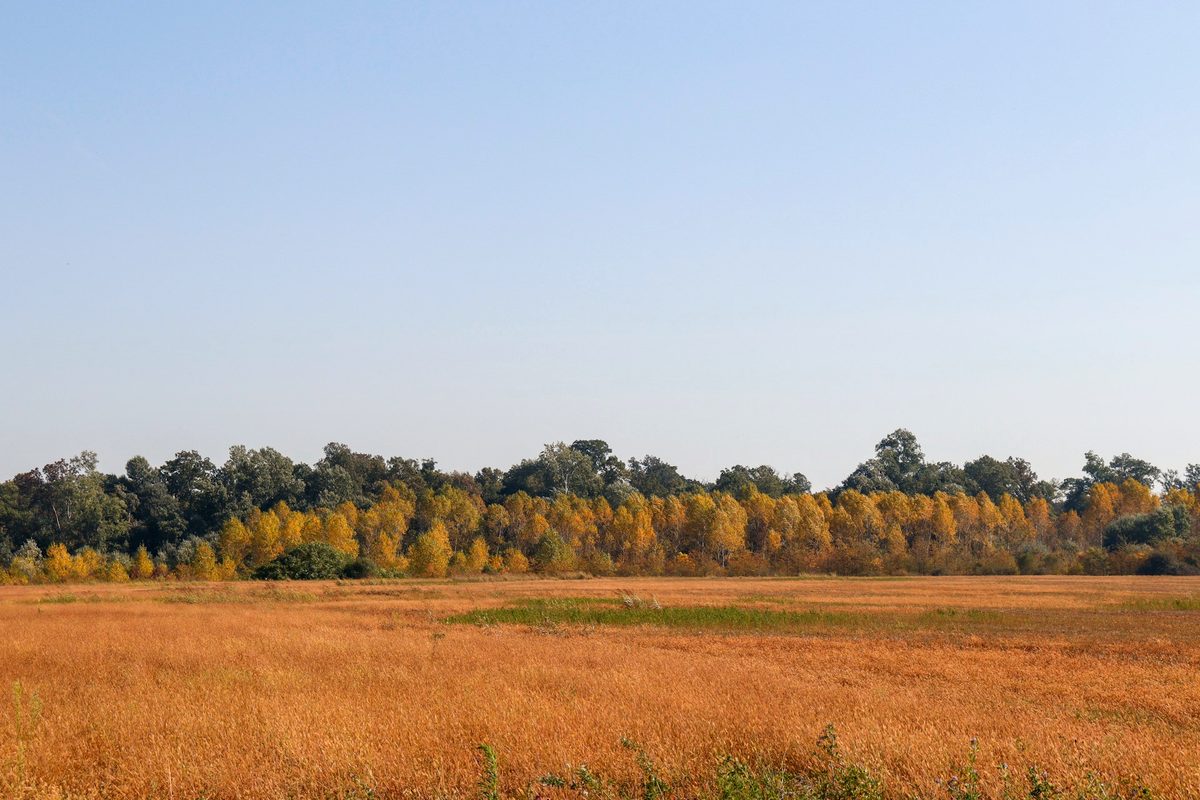
Buying rural and agricultural land is one of the few real-estate decisions where the dirt itself is only part of the asset. A grazing run, a cropping aggregation, an almond orchard or an irrigated cotton block each comes bundled with productive capacity, infrastructure, and in many cases a separately tradeable water entitlement. The investor is not simply buying a paddock; they are buying a position in a biological, climatic and commodity-driven business, whether or not they intend to ever drive a tractor.
For Australian and offshore capital alike, farmland has earned a reputation as a long-duration, inflation-aware store of value that has historically delivered steady capital appreciation alongside an operating income stream. That reputation is largely deserved, but it hides enormous variation. Returns from broadacre wheat country in a marginal-rainfall district behave nothing like returns from a water-secure horticultural estate in the Riverina. Understanding which sub-class you are acquiring, and how income and capital growth combine within it, is the first and most important task.
This guide sets out the main sub-types of rural land, the return drivers, how water rights function as a distinct asset, the leaseback and corporate-farming structures that let passive investors participate, the foreign-ownership rules administered through the Foreign Investment Review Board (FIRB) and the agricultural land register, and the due-diligence quirks that separate a sound rural acquisition from an expensive mistake.
In most other property classes the building is the asset and the land is the constraint. In agriculture it is reversed: the land's productive capacity, and the water that unlocks it, is the asset, and everything built on it is depreciating support infrastructure.
What you are actually buying
Rural land is not a single market. The risk, return and management profile changes completely across its sub-types, and a buyer who treats "farmland" as one asset class will mis-price the deal in front of them.
The main sub-classes
- Broadacre cropping. Large-scale grain, oilseed and pulse country (wheat, barley, canola, chickpeas). Income is highly seasonal and rainfall-dependent on dryland blocks; capital values track soil type, reliability of rainfall, and proximity to grain-receival and port infrastructure.
- Grazing. Cattle and sheep country, from high-rainfall fattening blocks to extensive arid-zone stations carried on very large areas. Income depends on stocking rates, livestock and wool prices, and seasonal conditions; values per hectare vary by orders of magnitude with carrying capacity.
- Permanent horticulture. Orchards, vineyards, nut plantations (almonds, macadamias), citrus and table grapes. These are capital-intensive, long-establishment assets where the trees or vines are themselves a major part of the value, and where water security is non-negotiable.
- Irrigated / water-dependent. Cotton, rice, dairy and intensive horticulture that rely on irrigation drawn against water entitlements. Here the land and the water entitlement are economically inseparable, even though they can be legally and commercially separated.
A common error among first-time rural buyers is to anchor on price per hectare. A 4,000-hectare arid grazing station and a 40-hectare almond estate can carry similar dollar values; the per-hectare figure tells you almost nothing without carrying capacity, water, and reliable yield in the same sentence. This is one reason agricultural valuation sits apart from conventional commercial property valuation methods, which lean heavily on capitalised rent.
1 The two return engines: income and capital growth
Farmland returns come from two distinct sources that move on different cycles, and the balance between them is the single best lens for deciding whether a property suits a given investor.
Operating income
Operating income is the profit from production, after the costs of seed, fuel, fertiliser, labour, livestock, water and finance. It is genuinely volatile. A dryland cropping enterprise can swing from a strong surplus in a good season to a loss in a drought year, and commodity prices add a second, partly independent layer of variability. Investors who want a smoother income line typically lease the land to an operator rather than farm it directly, converting an uncertain trading result into a contracted rent.
Capital growth
The more durable part of the long-run story has been capital appreciation. Published farmland series, including the long-running rural property data sets compiled by Rural Bank (a division of Bendigo and Adelaide Bank), have shown decades of broadly upward median land-value growth, punctuated by drought-driven flat or falling periods. The drivers are real and structural: a finite supply of quality arable land, productivity gains that let larger operators bid more per hectare, scale-driven aggregation, and over the long term, global demand for protein and food.
None of that guarantees the next decade repeats the last. Land values can and do fall in prolonged dry periods and when commodity prices retreat, and the strong run of values in the early 2020s came off an unusual combination of low interest rates and high commodity prices. As with any class, current figures should be benchmarked against the latest published series rather than assumed, and the relationship between borrowing costs and asset values applies as much here as it does to commercial property yields.
| Sub-class | Income character | Capital growth driver | Key risk |
|---|---|---|---|
| Broadacre cropping | Highly seasonal, rainfall-driven | Soil quality, rainfall reliability, scale | Drought, grain price, input costs |
| Grazing | Variable with livestock prices | Carrying capacity, herd/flock cycle | Seasonal feed, livestock price cycle |
| Permanent horticulture | Higher but capital-intensive | Tree/vine maturity, water security, demand | Establishment cost, water, oversupply |
| Irrigated | More reliable where water secured | Water entitlement value, productivity | Allocation/policy risk, water cost |
2 Water rights as a separate asset
In the southern Murray-Darling Basin in particular, water is not an attribute of the land; it is a property right that can be owned, valued, leased and sold independently. Understanding this distinction is essential, because a buyer can purchase irrigated-looking country and discover the seller has carved off and sold the water that made it productive.
Entitlements versus allocations
- Water access entitlement. A perpetual or ongoing right to a share of a consumptive pool, registered on a state water register (for example in New South Wales, Victoria and South Australia). This is the durable capital asset, and high-reliability entitlements trade at a premium to lower-reliability classes.
- Seasonal allocation. The actual volume announced against that entitlement in a given season, which varies with dam storages and inflows. In a dry year the allocation against a general-security entitlement can fall sharply.
- Temporary (allocation) trade. The market in which announced water is bought and sold within a season, separate from permanent entitlement trade.
For a horticultural or irrigated purchase, a buyer must establish exactly which entitlements transfer with the land, their reliability class, whether any are mortgaged or leased out, and what they are worth in their own right. Water can represent a very large share of total asset value on a horticultural estate, and treating it as a free extra rather than a separately diligenced asset is among the most expensive errors in rural buying. This separability also makes farmland a genuinely distinct line item in a property portfolio diversification strategy.
3 Passive participation: leaseback and corporate farming
Most investors who want farmland exposure have no intention of operating. There are several established routes to a passive or semi-passive position, each with a different risk and covenant profile.
Lease to an operator
The owner leases the land (and sometimes the water and improvements) to a farming operator for a contracted rent, often on multi-year terms with reviews. This converts trading volatility into a more predictable income stream, but it transfers the buyer's attention onto the strength of the operator. The same discipline used in tenant due diligence for commercial property applies: the rent is only as good as the lessee's balance sheet, track record and ability to keep paying through a poor season.
Sale and leaseback
A long-established producer sells its land to an investor and simultaneously leases it back, freeing capital to deploy into the operating business. Institutional vehicles have built sizeable portfolios this way. The tension is the familiar one: because the vendor sets the rent and term, the buyer must independently test that the rent is sustainable against the land's productive capacity, not just that it produces an attractive headline yield on day one.
Corporate and institutional farming
Listed and unlisted funds, superannuation investors and offshore institutions hold large aggregations directly or through managed vehicles. For private investors, indirect exposure through an agricultural fund or syndicate can provide diversification across regions and commodities without the lumpiness of a single block, and it is one of the routes considered in a thoughtful family office property allocation.
4 FIRB and the agricultural land register
Foreign investment in Australian agricultural land is more tightly scrutinised than in most other property classes, and the rules are administered by the Foreign Investment Review Board on behalf of the Treasurer, with the Australian Taxation Office maintaining the registers.
- Lower screening thresholds. Agricultural land carries a materially lower FIRB screening threshold than most commercial land, with the cumulative value of a foreign person's agricultural-land holdings counted toward it. Thresholds and free-trade-agreement carve-outs change, so the current settings must be checked against the FIRB and ATO guidance at the time of any transaction.
- Register of Foreign Ownership. Foreign persons must register interests in Australian agricultural land (and water entitlements) on the ATO-administered Register of Foreign Ownership of Australian Assets. Registration obligations apply even where a transaction does not require prior approval.
- Water entitlements. Foreign holdings of registrable water entitlements are separately reportable, reflecting the policy view of water as a strategic resource.
These obligations are detailed and carry real penalties for non-compliance, so foreign buyers (and Australian buyers using structures with foreign interests) should treat them as a gating item, not an afterthought. The broader framework is covered in the guides on FIRB requirements for property buyers.
5 The risks that are specific to rural land
Agriculture concentrates several risks that simply do not exist, or exist far more mildly, in conventional commercial property.
- Climate and seasonal risk. Drought, flood, frost, fire and shifting rainfall patterns directly drive income and, over time, land value. Long-run climate trends in a district matter as much as the current season.
- Commodity-price risk. Grain, beef, wool, dairy, wine grape and nut prices move on global cycles outside any operator's control, and oversupply in a fast-growing horticultural commodity can compress returns for years.
- Water and policy risk. Allocation reliability, Murray-Darling Basin policy, buybacks and trading-rule changes all affect the value of water-dependent assets.
- Input-cost risk. Fuel, fertiliser, chemicals and labour are volatile and can squeeze operating margins independently of output prices.
- Liquidity and thin markets. Quality rural assets are sold infrequently in localised markets, so realising value can take time and depends on a small pool of capable buyers.
- Biosecurity and land condition. Pests, weeds, disease, soil degradation, salinity and erosion can quietly erode productive capacity.
6 Valuation quirks and due diligence
Because farmland combines land, water, plant, livestock and a trading business, its valuation and due diligence diverge meaningfully from conventional commercial work.
How rural land is valued
Valuers typically use a comparable-sales approach expressed per hectare or per productive unit (a dollar-per-megalitre figure for water, a per-tree or per-vine figure for plantings), often cross-checked against a productive-value or sustainable-carrying-capacity assessment. Improvements (sheds, silos, fencing, irrigation, housing) are valued for their contribution to production rather than at replacement cost, since much rural infrastructure is depreciating support rather than a value driver in its own right.
The buyer-side due-diligence checklist
- Title, tenure and access. Freehold versus leasehold or pastoral/Crown lease (much of inland Australia is held under pastoral lease, not freehold), easements, carbon and native-title considerations, and legal access.
- Water. Exactly which entitlements transfer, their reliability class, registration, any encumbrances, metering compliance and the cost and reliability of supply.
- Soil, land condition and contamination. Soil tests, salinity and erosion, chemical residues, and any prior intensive use.
- Rainfall and production records. Multi-year yield, stocking and rainfall history, not a single good season cherry-picked by the vendor.
- Lease and operator covenant. Where a lease is in place, the rent sustainability, term, reviews and the lessee's financial strength.
- Statutory and holding costs. Rates and any applicable charges; rural land is generally treated differently from urban land for state taxes, so the position should be confirmed alongside the relevant land tax rules for the state.
- Environmental and biosecurity overlays. Vegetation-clearing rules, threatened-species and biosecurity obligations.
This is specialised territory, and the standard commercial property due diligence framework needs to be extended with agronomic, hydrological and seasonal inputs. Independent expertise (agronomists, water consultants, rural valuers) usually pays for itself many times over relative to the size of these transactions.
Frequently Asked Questions
Is farmland a good investment in Australia?
Historically, Australian farmland has delivered steady long-run capital growth alongside an operating income stream, which is why it appeals to long-duration and inflation-aware capital. The returns are real but uneven across sub-types and cycles, and they carry climate, commodity, water and liquidity risks that conventional property does not, so figures should always be benchmarked against current published series rather than assumed.
Do water rights come with the land when you buy a farm?
Not automatically. In much of the Murray-Darling Basin, water entitlements are a separate, tradeable property right registered on a state water register, and a seller can retain or sell them apart from the land. A buyer must confirm exactly which entitlements transfer, their reliability class and their standalone value, because water can represent a very large share of an irrigated property's worth.
Can foreign investors buy agricultural land in Australia?
Yes, but agricultural land is screened more tightly than most other property. It carries a lower FIRB screening threshold (with holdings counted cumulatively), and foreign persons must record their interests in agricultural land and water entitlements on the ATO-administered Register of Foreign Ownership. The current thresholds and obligations should be checked against FIRB and ATO guidance for each transaction.
How can I invest in farmland without operating a farm?
The common passive routes are leasing the land to a farming operator for a contracted rent, buying a property on a sale-and-leaseback to an established producer, or gaining exposure through an agricultural fund or syndicate. Each shifts the focus from running the farm to assessing the operator's covenant and the sustainability of the rent against the land's true productive capacity.