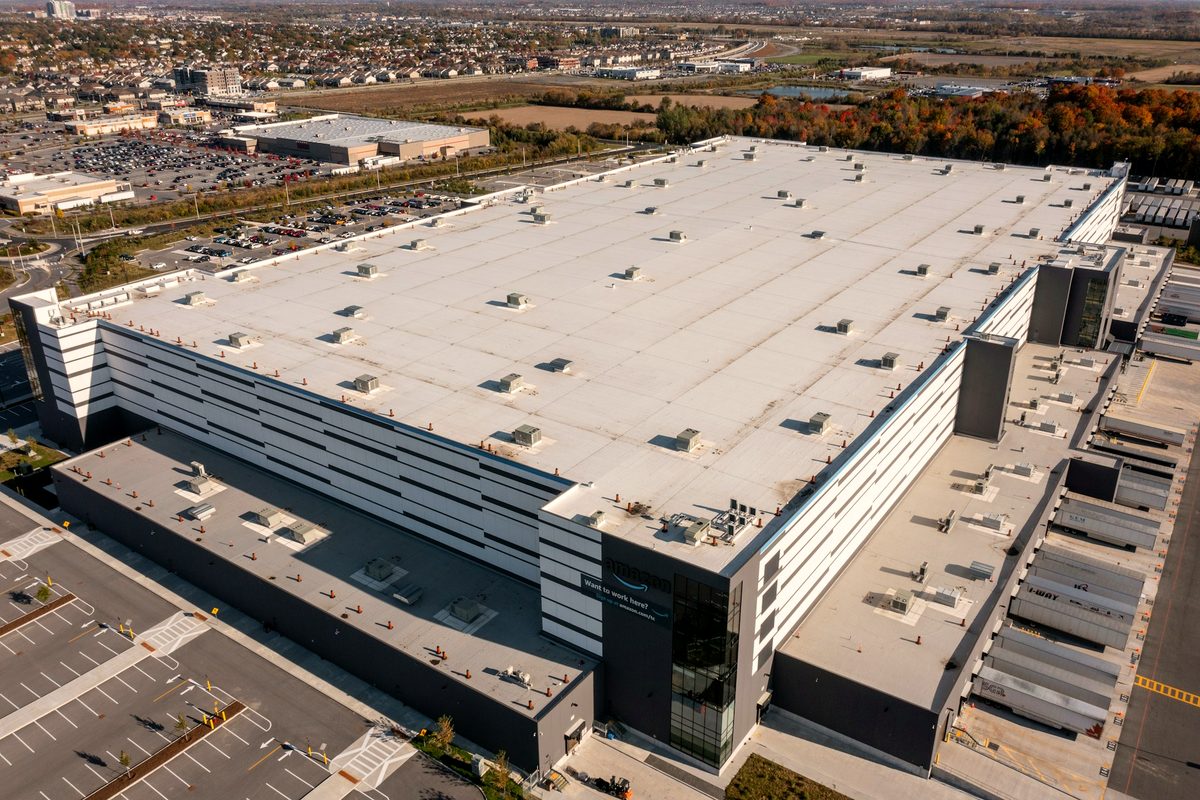
Self-storage has become one of the most institutionalised specialist commercial asset classes in Australia. The combination of recurring monthly revenue, low operating-cost ratios, deep catchment-level demand drivers, and a clear operating template has attracted institutional capital, REITs, and private investors at every ticket band from $1 million to $100 million plus. For private buyers, the available stock ranges from single-facility owner-operator opportunities through to leased net-lease arrangements with national operators.
This guide covers what a self-storage investment property actually is, the two principal ownership models (owner-operate vs net-lease), the operator and catchment drivers, and the underwriting questions specific to the sector.
Self-storage looks like industrial property but trades like a niche operating business. The income is a rolling weekly average of hundreds of small customer commitments, not a few long leases. The underwriting framework is different.
The Two Ownership Models
Owner-operate freehold
The investor owns the freehold and operates the facility, either directly or through a management contract. Revenue flows from individual storage unit rentals to a large number of small customers. The investment is partly real estate, partly operating business.
Net-lease to operator
The investor owns the freehold and leases the entire facility to a national or regional self-storage operator (Storage King, National Storage, Kennards Self Storage, Fort Knox). The operator runs the customer-facing business; the landlord receives rent. The investment is pure real estate, similar to other long-WALE specialist commercial.
Each model has a different return profile, risk profile, and operating burden. Net-lease produces the lower headline yield but the cleanest income stream; owner-operate produces higher gross yields but requires active management and exposes the investor to operating-business volatility.
1 The Catchment Demand Model
Self-storage demand is driven by population density within a 3 to 5 km catchment, household formation rates, renter mix in the catchment, and the supply of competing facilities. The demand drivers are quantifiable from ABS data and the supply drivers are mappable from operator websites and the council planning register.
Demand drivers
- Population in 3 km catchment. 25,000 to 60,000 people is the typical viable range for a 2,000 to 5,000 square metre facility.
- Household formation. Renters move more often than owners; high renter mix drives storage demand.
- Apartment density. Apartment dwellers have less storage space and lower garage allocation; high apartment mix lifts storage demand per capita.
- Small business density. Tradespeople, e-commerce sellers, and small businesses use storage for inventory and equipment.
Supply drivers
- Competing facilities. Number of competing facilities within 3 km, total square metres of competing supply.
- Approved supply. Council DA register for self-storage applications in the catchment.
- Operator concentration. A catchment dominated by one operator behaves differently to a fragmented catchment.
2 Facility Economics
Occupancy
Stabilised occupancy in a metro Australian self-storage facility is typically 80% to 92% by square metre. Below 75%, the facility is structurally under-occupied or in a thin catchment. Above 95%, the facility is essentially capacity-constrained and has rate-card pricing power.
Revenue per available square metre (RevPASM)
The headline economic metric. Calculated as total revenue divided by available rentable square metres. Comparable across facilities and across operators.
Operating expenses
Direct operating costs (utilities, insurance, security, maintenance, on-site management) typically run 25% to 35% of revenue at stabilised occupancy. Indirect costs (head office, marketing, technology) add another 5% to 10% for operators with national networks.
NOI margin
Stabilised NOI margins of 55% to 70% are achievable on well-positioned facilities at full occupancy. Lower-margin facilities reflect higher OpEx, lower revenue per square metre, or both.
3 The Operator Tiers
National operators
Kennards Self Storage, Storage King, National Storage (NSR, ASX-listed), Fort Knox. National scale, technology platforms, brand recognition, and consistent operating standards. Net-lease facilities with national operators are the institutional-grade segment.
Regional operators
State-level or capital-city operators with 5 to 30 facilities. Strong local market knowledge; less technology infrastructure than national peers.
Owner-operators
Single-facility or two-facility owner-operators. Direct customer relationships, lower OpEx ratios in some cases, but exposed to operating-business risk if the owner sells.
4 Building Specification
Modern self-storage facilities are climate-controlled, multi-storey purpose-built, with drive-up unit access on ground floor and lift-and-trolley access to upper floors. Older single-storey unit blocks are less efficient on land utilisation but cheaper to build.
Specification drivers
- Unit mix. The right mix of small (3 to 5 square metres), medium (8 to 12 square metres), and large (20 plus square metres) units for the catchment.
- Climate control. Coastal and northern climates benefit from climate-controlled units; cooler markets are less differentiated.
- Drive-up access. Premium for ground-floor drive-up; standard for older single-storey facilities.
- Security. 24/7 surveillance, individual unit alarms, gated access.
5 Buyer-Side DD Steps
- Catchment demand analysis. ABS data, demographic profile, household formation, apartment mix.
- Supply analysis. Competing facilities, approved supply, council DA register.
- Operating financials. 36 months of operating P&L, occupancy trajectory, rate card history.
- Unit mix and pricing. Current mix against catchment demand, rate card vs market.
- Facility condition. Independent inspection of structure, security, climate control, lift, parking.
- Operator review. For net-lease, the operator's financials and lease structure. For owner-operate, the management transition plan.
- Planning and zoning. Council consent, special use provisions, expansion potential.
- Comparable sales. Recent self-storage sales by tier and catchment.
6 Yields and Pricing
Net-lease self-storage with national operators prices at the tighter end of the specialist commercial yield spectrum. Owner-operate facilities trade at wider headline yields reflecting the operating-business risk. Pricing differentiation is principally about operator covenant, lease structure, and facility specification.
Frequently Asked Questions
Is self-storage suitable for a passive investor?
Net-lease yes. Owner-operate no, unless the investor is committed to running an operating business or appointing third-party management.
What is the typical exit buyer pool?
Net-lease facilities with national operators have national institutional and family-office buyer pools. Owner-operate facilities have a narrower buyer pool dominated by operators consolidating.
How does the EV transition affect self-storage?
Minimally. Self-storage demand is driven by household and small-business needs, not by transport sector dynamics. Some operators are installing EV charging at flagship facilities as a customer amenity.
Is self-storage suitable for an SMSF?
Net-lease yes, subject to the standard SMSF and LRBA rules. Owner-operate is generally not suitable because it operates as an active business rather than an investment.