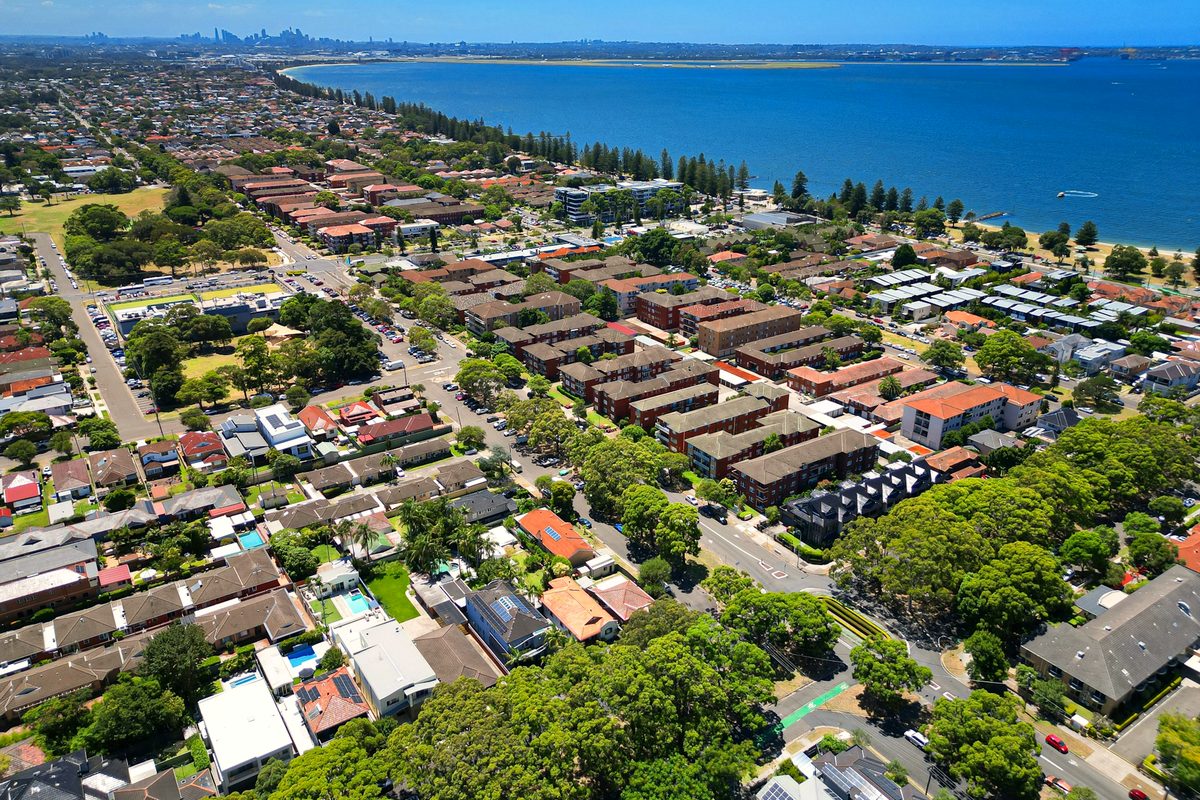
A land lease community (LLC) is one of the more misunderstood corners of Australian property. The structure is deceptively simple: the resident buys the dwelling, a manufactured or modular home, while the operator retains ownership of the land and leases the individual site back to the homeowner for an ongoing weekly or fortnightly site fee. What the investor acquires is not a collection of houses at all. It is the land, the common infrastructure, and a long, regulated income stream made up of hundreds of recurring site rentals.
That distinction matters, because it changes how the asset behaves, how it is valued, and what can go wrong. An LLC sits between residential and commercial property: the customers are residents living in their own homes, but the cash flow profile, the management intensity, and the regulatory overlay look far more like an operating business than a block of flats. For private buyers and family offices weighing it against conventional commercial exposure, understanding the mechanics is the difference between buying a durable income annuity and inheriting a management headache.
Land lease has grown from a niche product into an institutional asset class on the back of an ageing population and chronic housing affordability pressure. Demand is real and demographically anchored. But the model carries specific risks, regulatory, operational, and reputational, that reward careful diligence and punish the buyer who treats it like a caravan park with nicer landscaping.
In a land lease community the homeowner owns the dwelling but not the dirt. The investor owns the dirt, the infrastructure, and a regulated stream of site fees, which is why the asset is priced and managed like an operating business, not a residential block.
What land lease communities actually are
The defining feature of the model is the separation of dwelling ownership from land ownership. A resident purchases their manufactured home, often for a price comparable to a modest unit, and signs a site agreement to lease the land it sits on. Because the resident owns the home, they are not paying rent in the conventional sense; they pay a site fee that covers their occupation of the land and access to community facilities such as a clubhouse, pool, bowling green, or community bus.
A critical part of the economics, and a frequent point of confusion, is Commonwealth Rent Assistance (CRA). Many residents in over-50s communities are aged pensioners, and because their site fee is treated as rent for Centrelink purposes, eligible residents can receive CRA. This is one reason operators describe site fees as resilient: a meaningful slice of the payment is underwritten by a Commonwealth benefit that is indexed over time. It does not make the income risk-free, but it does change its character.
How it differs from a caravan or holiday park
Land lease communities are routinely confused with caravan and holiday parks, and while some operators run both, the assets differ. Holiday parks generate income from seasonal short-stay tourism and are exposed to discretionary travel spend. A genuine residential land lease community is a permanent-residence product: residents live there full time, hold long-term site agreements under residential tenancy-style legislation, and own a fixed dwelling. The income is recurring and far less cyclical than tourism, but the protections afforded to permanent residents are also stronger, which constrains how an operator can lift fees or move people on.
1 Who operates in the sector
The Australian land lease sector is consolidating around a handful of listed and large private operators, alongside many smaller family-owned communities. Recognisable names include Ingenia Communities, Lifestyle Communities, Hometown Australia, and GemLife. The listed operators have professionalised the product, raising the standard of design, amenity, and resident experience, and in doing so have pulled institutional capital into a space that was once almost entirely the domain of private park owners.
For a private buyer, the operator landscape matters in two ways. First, the listed players set the benchmark for what a quality community looks like, the standard against which any acquisition will be valued. Second, the existence of well-capitalised acquirers provides an eventual exit: a well-run smaller community is a credible bolt-on for a larger group. Most private investors, though, will be looking at established, fully or partly occupied communities rather than competing with developers on new greenfield estates.
2 The demographic engine
The structural driver behind land lease is the over-50s and seniors demographic. Australia's population is ageing, and a large cohort of asset-rich, income-modest retirees are looking to downsize from the family home, release equity, and move into a lower-maintenance, community-oriented lifestyle without the deferred management fees and entry/exit complexity of a traditional retirement village.
Land lease answers that demand neatly. A retiree can sell the family home, buy a new manufactured home outright for a fraction of the proceeds, pocket the difference (often without it counting fully against the pension assets test, though residents should seek their own advice), and fund the modest site fee partly through CRA. The product converts the affordability and longevity pressures facing older Australians into a durable demand pipeline. This same tailwind is why some institutional buyers and a family office property allocation increasingly include seniors-living exposure as a long-duration, defensive holding.
3 Income durability and the return profile
The investment appeal of land lease rests on the quality of its income. Site fees are paid by residents who own their homes and have, in many cases, sunk their life savings into them, which makes occupancy extremely sticky. People do not casually relocate a manufactured home. Combined with CRA support, contractual fee escalation (typically CPI- or fixed-percentage-linked), and high occupancy in well-located communities, the result is a long-duration, inflation-aware income stream.
Investors should still be disciplined about how that income is measured. The headline commercial property yield on a stabilised community sits toward the more attractive end of the spectrum relative to prime office or industrial, reflecting the operational nature of the asset and a thinner buyer pool. As with all yields, the figure moves with the interest-rate cycle and should be benchmarked against current published series, not treated as a fixed rule of thumb. The crucial discipline is to separate genuinely contracted, occupied site income from optimistic assumptions about future fill rates or fee growth.
| Feature | Land lease community | Standard residential rental block |
|---|---|---|
| What the investor owns | Land and infrastructure only | Land and the dwellings |
| What the resident pays | Site fee (rent for the land) | Rent for the whole dwelling |
| Government income support | Often CRA-eligible | CRA may apply to the tenant |
| Occupancy stickiness | Very high (home is fixed) | Moderate; tenants move freely |
| Capital cost per resident | Lower (no dwelling to build) | Higher (full dwelling) |
| Management intensity | High (operating business) | Moderate |
4 The regulatory framework
This is a YMYL asset and regulation is central. Residential land lease is governed at the state and territory level by purpose-built legislation, not by ordinary commercial leasing law. The relevant statutes include the Residential (Land Lease) Communities Act 2013 (NSW), the Residential Tenancies Act 1997 (VIC) as it applies to site agreements, the Manufactured Homes (Residential Parks) Act 2003 (QLD), and equivalent regimes in other states. These Acts are designed to protect a vulnerable, often elderly resident base.
The protections typically cover how site fees can be increased, the disclosure an operator must give before a resident signs, the rules around selling a home within the community, dispute resolution through state tribunals, and the operator's obligations to maintain common infrastructure. For an investor, the upside is a stable, legislated framework; the constraint is that fee increases, evictions, and changes to community rules are not at the operator's sole discretion. Buyers should treat the applicable state Act as a core diligence document, in the same way a buyer of tenanted retail would study the relevant retail leases legislation.
5 Development and value-add upside
Beyond stabilised income, land lease communities can offer development upside. Many established sites carry surplus land, under-utilised areas, or approvals to add further home sites. Each new site filled is incremental, high-margin, long-duration income added to the community at a low marginal cost, because the dwelling is funded by the incoming resident, not the operator.
This staged-development characteristic is part of why the listed operators have grown so quickly and why some private buyers seek communities with expansion capacity. It does, however, introduce a development risk profile, planning approvals, civil works, sales velocity, and holding costs, on top of the income asset. A buyer should value the in-place income on its own merits and treat the pipeline as separately risk-adjusted optionality, not guaranteed value. In broad terms the model shares some DNA with purpose-built rental product such as build-to-rent: long-duration, operationally intensive, and increasingly institutional.
6 Due diligence and what goes wrong
Land lease is an operating asset, so diligence must go well beyond a building inspection. The investor is buying a business, a community, and a body of regulated relationships. Tenant and income verification here is its own discipline, closely related to tenant due diligence in the commercial context, but applied across hundreds of small residential agreements rather than one corporate covenant.
The income and agreement review
- Site agreement audit: verify the number of occupied versus vacant sites, the fee level on each, the escalation mechanism, and any sites on legacy or discounted agreements that lag the market.
- Arrears and CRA reliance: assess payment history, arrears levels, and the proportion of income that depends on resident CRA eligibility.
- Disclosure compliance: confirm the operator has met statutory disclosure obligations, because non-compliant agreements can be challenged at tribunal.
The physical and operational review
- Infrastructure condition: roads, drainage, water, sewer, electrical reticulation, and the clubhouse are the operator's responsibility and can carry significant deferred capital expenditure.
- Approvals and zoning: confirm the site's planning approval, the number of approved dwellings, and any conditions, including for flood, bushfire, or other overlays.
- Reputation and culture: resident disputes, negative tribunal history, or a community at war with management directly erodes value and is hard to reverse.
The classic failures in this sector are predictable: buyers who overpay by capitalising aspirational rather than contracted income; communities with hidden infrastructure liabilities; fee structures that have not kept pace because of poorly drafted escalation clauses; and operators who damage long-term value by squeezing residents in ways that breach the protective legislation. The asset rewards a buyer who treats it as a long-hold, well-managed business rather than a passive coupon, and who is honest about management intensity. Like other thinner, more specialised commercial markets, including parts of the regional commercial landscape, liquidity and buyer depth can tighten quickly when conditions turn.
Frequently Asked Questions
Do residents own their homes in a land lease community?
Yes. Residents own the manufactured or modular dwelling outright, but they do not own the land it sits on. They lease the individual site from the community operator under a long-term site agreement and pay an ongoing site fee, which is what generates the investor's income.
How is a land lease community different from a retirement village?
Retirement villages typically operate under state Retirement Villages Acts using a deferred management fee or loan-licence model, where the operator clips a substantial fee on exit. In a land lease community the resident owns the home, pays an ongoing site fee instead, and the deferred management fee structure generally does not apply, which many downsizers find simpler and more transparent.
Is the income from site fees secure?
It is durable but not risk-free. Occupancy is very sticky because homes are fixed in place, fees usually escalate by CPI or a fixed percentage, and a portion of resident payments can be supported by Commonwealth Rent Assistance. The income is still exposed to vacancy, arrears, deferred infrastructure costs, and the constraints that state legislation places on raising fees.
What legislation governs land lease communities in Australia?
Each state and territory has its own regime, such as the Residential (Land Lease) Communities Act 2013 in NSW and the Manufactured Homes (Residential Parks) Act 2003 in Queensland, with equivalent provisions elsewhere. These Acts set the rules on fee increases, disclosure, selling a home, and dispute resolution, and the applicable state Act should be treated as a core due diligence document before purchase.